Skip to content
AIoT Report

AI meets Things

Where machine learning leaves the data center and runs next to the sensor. Edge AI, TinyML, on-device vision, predictive maintenance and the agents that are starting to operate homes and factories.

This section is also published as AIoT Report and has its own RSS feed.
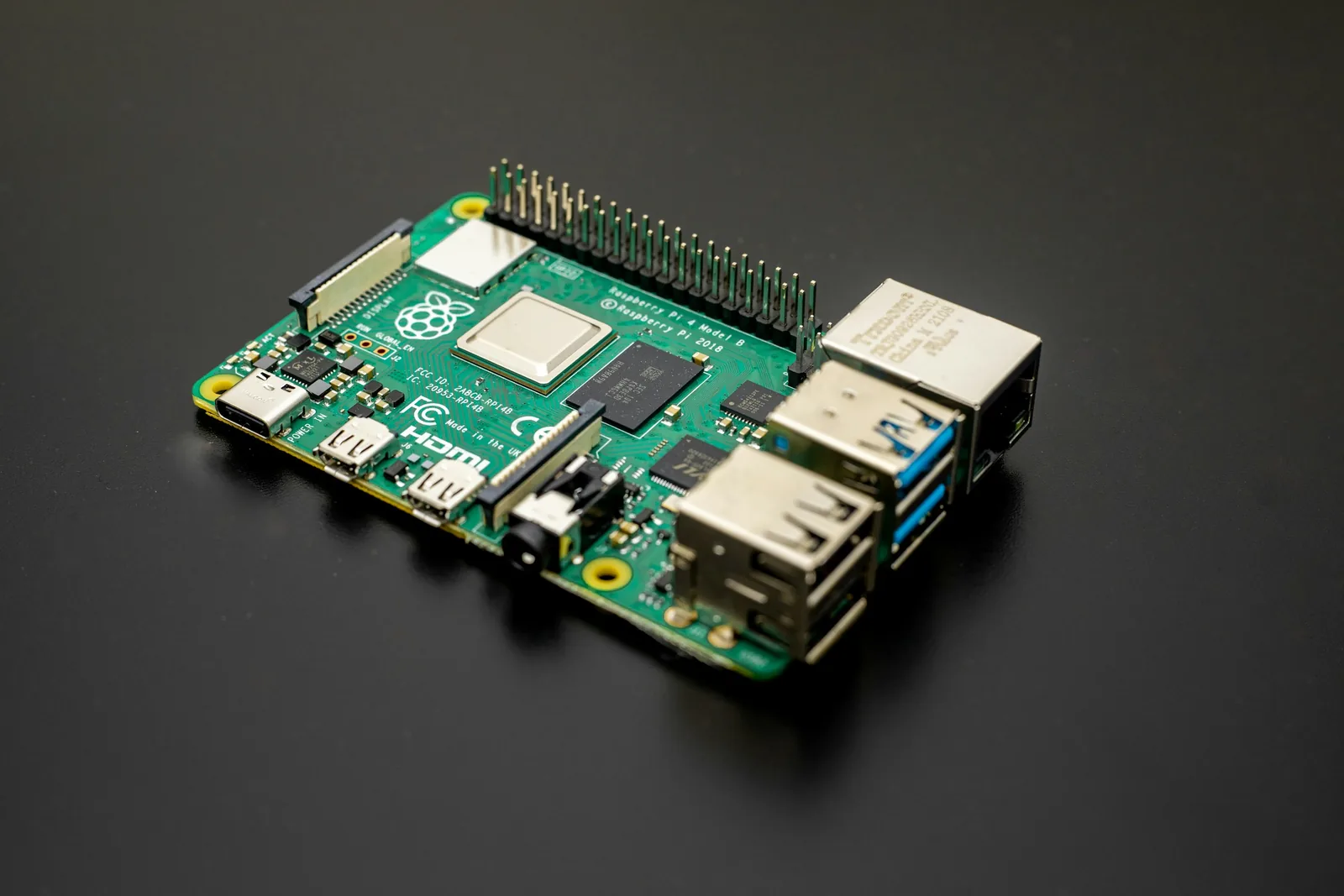
Close-up of a single-board computer on a dark table

Photo: Jainath Ponnala / Unsplash

On-device vision

On-device computer vision for IoT

How to run computer vision on IoT hardware: the capture-to-action pipeline, task types, hardware tiers, model choices and the limits of local processing.

intermediate
Predictive maintenance

Predictive maintenance with IoT and AI

How predictive maintenance works: vibration and current signatures, the signal processing behind them, the models that use them, and where it pays off.

intermediate
AI agents

AI agents for the smart home

How LLM-based agents control a smart home through Matter, Home Assistant and MQTT, what guardrails they need, and when a plain automation is better.

intermediate
AI agents

AI agents on the factory floor

How LLM agents fit into a plant: reading OPC UA and MQTT data, drafting work orders and diagnoses, and the guardrails that keep them away from control loops.

advanced

AI terms in the glossary

All AI terms
  • AI agentSoftware that pursues a goal by observing its environment, reasoning about what to do and calling tools or devices to act, often built on a large language model.
  • AIoTThe combination of artificial intelligence with Internet of Things systems, so that connected devices and their data pipelines can learn, classify and decide rather than only measure and report.
  • Anomaly detectionIdentifying readings or patterns that deviate from what a system has learned to consider normal, without needing examples of every possible fault.
  • Computer visionThe field of extracting information from images and video with software, from reading a gauge to tracking people and vehicles.
  • Condition monitoringContinuously measuring parameters such as vibration, temperature or current on a machine to track its health and detect deterioration early.
  • Deep learningA branch of machine learning that uses neural networks with many layers to learn features directly from raw signals such as images, audio or vibration.
  • Edge AIRunning machine learning inference directly on or near the device that produces the data, instead of sending everything to a cloud service first.
  • Federated learningA training approach where devices improve a shared model locally and send only parameter updates to a server, so raw data never leaves the device.
  • Generative AIModels that produce new content, such as text, images, code or synthetic sensor data, rather than only classifying or predicting from existing inputs.
  • InferenceThe act of running a trained machine learning model on new data to produce a prediction, classification or score.
  • Keyword spottingA small always-on audio model that listens for a specific word or phrase, such as a wake word, and triggers a larger process only when it hears it.
  • Large language model (LLM)A neural network trained on very large text corpora that can understand and generate language, and increasingly also call tools and interpret structured data.